
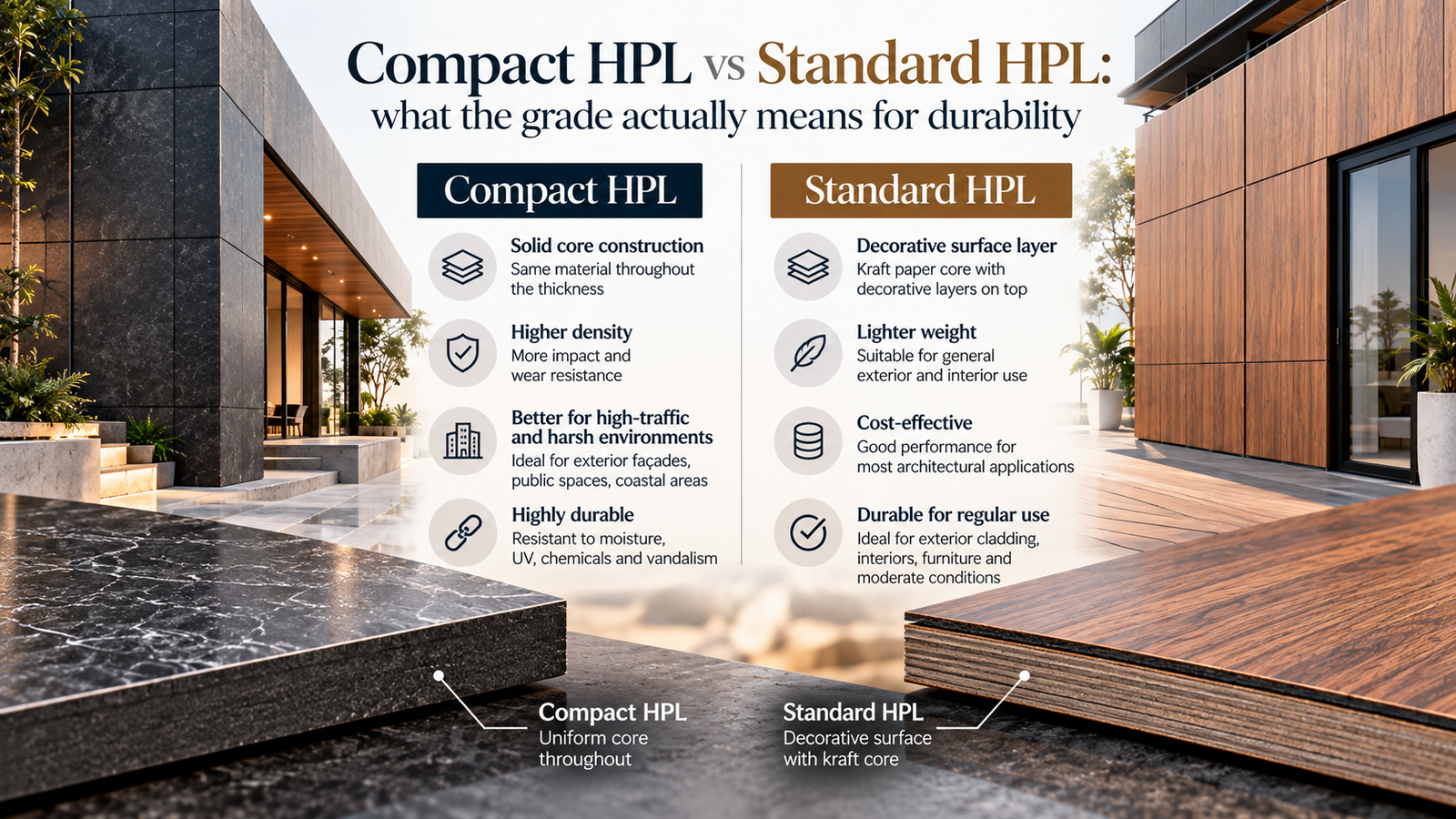
“HPL sheet” gets used as if it’s one product. Within the category, grade matters more than most buyers realise — and compact grade specifically is what separates a genuinely exterior-suited panel from one that’s better kept indoors.
What “compact” actually refers to
Compact HPL is solid and homogeneous through its full thickness — the same dense, resin-impregnated layered structure all the way through, with a decorative surface on one or both faces. It’s distinct from a thinner laminate sheet meant to be bonded onto a substrate like plywood or MDF, which is a different product entirely, built for a different job.
Why this distinction matters outdoors specifically
A thin laminate bonded to a substrate depends on that substrate staying dry and stable — if moisture gets into the board underneath, the whole assembly can warp or delaminate. Compact HPL doesn’t have that dependency, since there’s no separate substrate to protect. It’s the panel, full stop, which is exactly why it’s the grade specified for exterior facade use rather than the thinner bonded laminate products meant for interior furniture and cabinetry.
Thickness within the compact grade
Compact exterior panels are typically available from around 6mm up through 10mm or more, with thickness chosen based on panel span, fixing method, and wind-load considerations for the specific building. Thicker isn’t automatically “better” for every project — it’s a specification decision tied to the actual structural requirements, which is why a proper site or project assessment should inform thickness, not a generic default.
What buyers sometimes get confused on
Some lower-cost “exterior HPL” offerings in the market are closer to interior-grade laminate with claims stretched to cover outdoor use. The compact, full-thickness construction is the actual marker of a genuinely exterior-suited product — it’s worth asking directly whether a quoted panel is true compact grade, not just described loosely as “HPL,” before committing to a facade project.
FAQ
Can compact HPL be used indoors as well as outdoors?
Yes, compact grade works fine indoors too — the reverse isn’t true, since standard interior laminate isn’t built for outdoor exposure.
Does a thicker compact panel cost proportionally more?
Generally yes, roughly in line with the additional material, though the difference is usually a modest part of overall project cost compared to installation and finish choices.
How can I confirm a quoted product is genuinely compact grade?
Ask for the technical data sheet specifying construction and thickness, and if in doubt, request a physical cut sample to inspect the cross-section directly.